
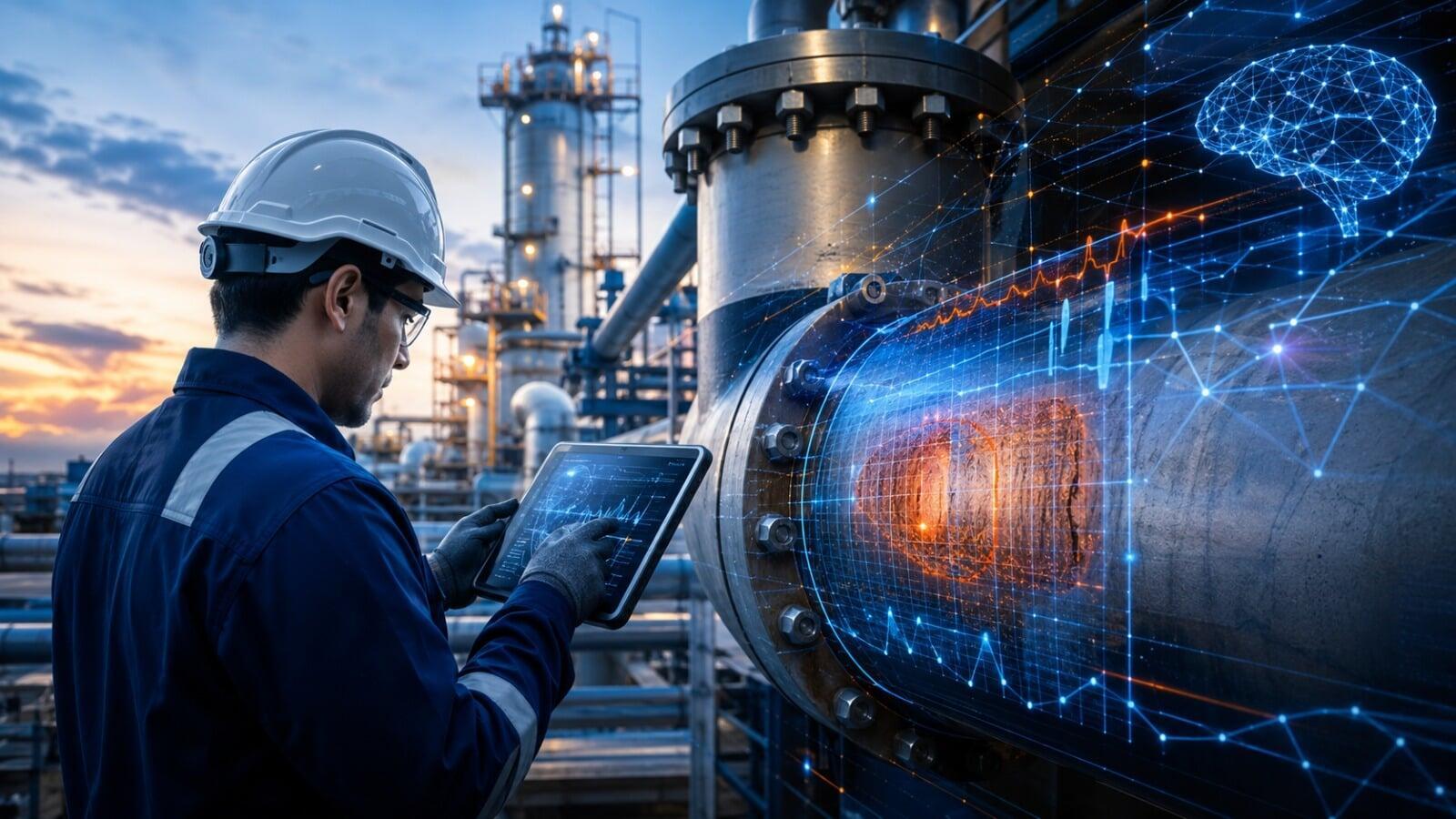
AI for Predictive Analysis: The Next Evolution of Non-Destructive Testing
Artificial Intelligence (AI) is rapidly transforming the way industries approach Non-Destructive Testing (NDT). Traditionally, inspections have focused on identifying defects after they develop. Today, AI is changing that approach by helping companies predict potential failures before they occur.
By analyzing inspection data, operating conditions, and historical trends, AI enables maintenance teams to make smarter decisions, improve asset reliability, and reduce unexpected downtime.
The future of NDT is no longer just about detecting defects, it's about preventing them.
How AI Is Changing NDT
Every inspection generates valuable data. Whether it comes from ultrasonic testing, radiography, eddy current, thermography, or visual inspections, AI can analyze thousands of inspection records to identify patterns that would be nearly impossible to detect manually.
As AI systems continue learning from new data, they become increasingly effective at recognizing early signs of degradation, estimating the remaining life of components, and recommending the optimal time for maintenance or re-inspection.
This allows organizations to move from scheduled maintenance to a more efficient predictive maintenance strategy.
AI Across Multiple Inspection Methods
Artificial Intelligence is enhancing virtually every major NDT technique.
- In Ultrasonic Testing (UT), AI improves signal interpretation and helps detect early crack formation with greater consistency.
- For Radiographic Testing (RT), image recognition algorithms automatically identify discontinuities such as cracks, porosity, or lack of fusion, allowing inspectors to focus on validating results instead of reviewing every image manually.
- In Eddy Current Testing (ECT), machine learning recognizes complex signal patterns associated with corrosion, fatigue, and surface defects, reducing false indications.
- AI also strengthens Thermography by identifying abnormal temperature patterns that may indicate electrical failures or mechanical problems before they become critical.
- Finally, computer vision is revolutionizing Visual Inspection, enabling cameras, drones, and robotic systems to automatically detect corrosion, coating damage, weld defects, and structural anomalies, especially in hazardous or difficult-to-access locations.
Why Predictive AI Matters
The integration of AI into NDT offers significant operational advantages.
Organizations can detect potential problems earlier, allowing maintenance teams to address issues before they result in costly failures. Predictive inspections also reduce unplanned downtime by scheduling repairs during planned maintenance windows.
Because inspections can be prioritized based on actual asset condition rather than fixed schedules, companies often reduce maintenance costs while improving resource allocation. Perhaps most importantly, predictive analysis enhances safety by helping prevent failures in critical infrastructure such as pipelines, pressure vessels, power plants, aircraft, and transportation systems.
AI Supports Inspectors, It Doesn't Replace Them
One common misconception is that AI will replace NDT professionals.
In reality, AI serves as a powerful decision-support tool. It automates repetitive analysis, accelerates data interpretation, and highlights areas that require attention, while certified inspectors remain responsible for validating results, making engineering judgments, and ensuring compliance with industry standards.
Human expertise continues to be essential for safe and reliable inspections.
The Future of Intelligent Inspection
As AI continues to evolve, it will increasingly work alongside technologies such as robotics, drones, IoT sensors, cloud computing, and digital twins to create fully connected inspection ecosystems.
Instead of relying solely on periodic inspections, industries will benefit from continuous asset monitoring, real-time condition assessment, and more accurate predictions of future failures.
This shift will help organizations maximize equipment reliability, improve operational efficiency, and extend the life of critical assets.
Final Thoughts
Artificial Intelligence is reshaping the future of Non-Destructive Testing by making inspections smarter, faster, and more proactive. Rather than simply identifying existing defects, AI enables organizations to anticipate potential failures, optimize maintenance strategies, and improve overall asset integrity.
Companies that embrace AI-driven predictive analysis today will be better positioned to reduce costs, increase safety, and stay ahead in an increasingly data-driven industrial landscape.
The future of NDT isn't just about finding defects, it's about predicting them before they happen.