
NM01T80441848
Choose Quantity
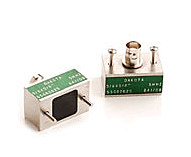
Dakota NDT — SSG50502 Standard Shear Wave Transducer (2.25 MHz, 0.5" × 0.5")
Angle Beam UT Probe with AWS Calibration Capability SKU: T-8044-1848Overview
The Dakota NDT SSG50502 Standard Shear Wave Transducer is a high-performance ultrasonic probe designed for angle beam inspections and weld evaluation. Operating at 2.25 MHz with a 0.5" × 0.5" element size, this transducer is optimized for deeper penetration, making it ideal for inspecting thicker materials and detecting subsurface discontinuities.
Designed for use with shear wave wedges, this probe enables angled beam inspections for identifying defects such as cracks, lack of fusion, and inclusions. Its AWS capability supports calibration and inspection procedures in accordance with AWS standards.
Equipped with a BNC connector, the transducer ensures reliable signal transmission and compatibility with a wide range of ultrasonic flaw detectors. It is widely used in industries such as oil & gas, fabrication, and construction where dependable flaw detection is required.
What's Included
| Item | Details |
|---|---|
| UT Transducer | SSG50502 shear wave probe, 2.25 MHz, 0.5" × 0.5" |
Box Dimensions & Shipping Weight (Estimated)
| Parameter | Imperial |
|---|---|
| Length | 6.0 in |
| Width | 4.0 in |
| Height | 3.0 in |
| Dimensions (L × W × H) | 6.0 × 4.0 × 3.0 in |
| Weight | 0.7 lb |
Key Specifications
| Parameter | Details |
|---|---|
| Probe Type | Shear wave ultrasonic transducer |
| Model | SSG50502 |
| Frequency | 2.25 MHz |
| Element Size | 0.5" × 0.5" |
| Connector Type | BNC |
| Calibration | AWS compatible |
| Application | Angle beam ultrasonic testing |
Performance Features
Deep Penetration Capability (2.25 MHz)
Ideal for inspecting thicker materials and deeper discontinuities.
Angle Beam Capability
Designed for use with wedges to generate shear waves for weld inspection.
AWS Calibration Support
Enables compliance with AWS inspection standards.
Reliable Signal Transmission
BNC connector ensures stable and consistent connectivity.
User-Friendly Design
- Easy connection to UT instruments
- Stable mounting with compatible wedges
- Lightweight and compact
- Designed for efficient inspection workflows
Built for Industrial Environments
- Durable construction for demanding applications
- Suitable for field and shop inspections
- Reliable performance in continuous use
- Designed for professional NDT workflows
Compatibility
Compatible with:
- Dakota NDT wedges (angle beam setups)
- Ultrasonic flaw detectors
- BNC UT cables
- AWS-based inspection procedures
Ideal Applications
- Weld inspection and flaw detection
- Inspection of thick materials
- Structural steel inspection
- Pipeline and pressure vessel inspection
- Oil & gas and construction industries
- Angle beam ultrasonic testing (UT)
About Dakota NDT
Dakota NDT is a trusted manufacturer of ultrasonic testing equipment and accessories, delivering reliable and high-performance solutions for industrial inspection. Their products are widely used in applications where precision, durability, and efficiency are essential.