
NM014720002
Choose Quantity
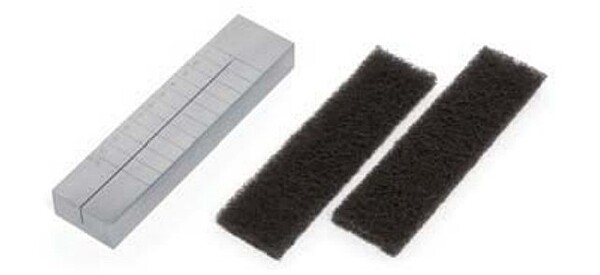
Karl Deutsch RMG-4015 — RMG Reference Block
SKU: 4720.002
Overview
The Karl Deutsch RMG Reference Block is an essential calibration and verification accessory specifically designed for use with the Karl Deutsch RMG-4015 Crack Depth Meter. Without a properly calibrated instrument, crack depth readings cannot be trusted — making this reference block a critical component of any rigorous, quality-compliant NDT inspection workflow.
The RMG Reference Block features precisely machined notches of known, certified depths that simulate real surface-breaking cracks. By measuring these reference notches, the inspector establishes an accurate, traceable calibration baseline across the full measuring range of the RMG-4015, ensuring that all subsequent crack depth readings are reliable, repeatable, and defensible.
How It Works
The reference block supports all three calibration methods available on the RMG-4015, allowing inspectors to choose the level of precision appropriate to their application:
- Single-point calibration — A simple comparison measurement at a reference notch with a depth close to the expected crack depth. Fast and practical for routine inspections.
- Zero-point calibration — A comparison measurement at a crack-free spot on the block to establish a baseline reading before inspection begins.
- Multi-point calibration — The most accurate method. Measurements are taken across reference notches of varying known depths, covering the full measurement range of the instrument. The resulting material characteristics curve is permanently stored in the RMG-4015's memory for ongoing use.
This flexibility means the reference block is equally at home in a quick field verification scenario or a high-precision laboratory calibration setting.
Key Features
- Precisely machined reference notches of known, certified depths for accurate and traceable calibration
- Supports all RMG-4015 calibration methods — zero-point, single-point, and multipoint material correction
- Material characteristics curve — enables users to build and permanently store a custom calibration curve tailored to the specific material being tested
- Constructed from electrically conductive material with properties closely matching those commonly encountered in test specimens
- Required for factory calibration — when purchased together with the RMG-4015 and a compatible probe, a full calibration certificate is included at no additional cost
- Compact and portable — designed to accompany the RMG-4015 in the field
Why Calibration Matters
The AC Potential Drop (ACPD) method used by the RMG-4015 relies on precise measurement of voltage drop across a crack. The electrical properties of the material being tested — conductivity, permeability, surface condition — directly influence the reading. Without calibrating against a reference standard, even a perfectly functioning instrument can produce inaccurate results.
Using the RMG Reference Block ensures that:
- Measurements are traceable to a known, certified standard
- Material-specific variables are accounted for through calibration
- Results meet the requirements of relevant NDT quality standards and inspection procedures
- Rework decisions based on crack depth data are made with full confidence
Required Configuration
Karl Deutsch specifies that the RMG-4015 system must include, at minimum, the following three components for proper operation and factory calibration:
| Component | Order No. |
|---|---|
| RMG-4015 Crack Depth Meter | 4015.003 |
| RMG Reference Calibration Block | 4720.002 |
| Crack Depth Probe (e.g. RMSQ 0°) | 4418.001 |
When the reference block and probe are purchased together with the RMG-4015 instrument, a full calibration certificate is included at no extra cost.
Ideal Applications
- Initial factory calibration of the RMG-4015 prior to first use
- Ongoing field verification of instrument accuracy
- Multi-point material correction calibration for enhanced measurement precision
- Quality assurance and compliance with NDT inspection procedures
- Aerospace, automotive, power generation, oil & gas, and heavy manufacturing inspections